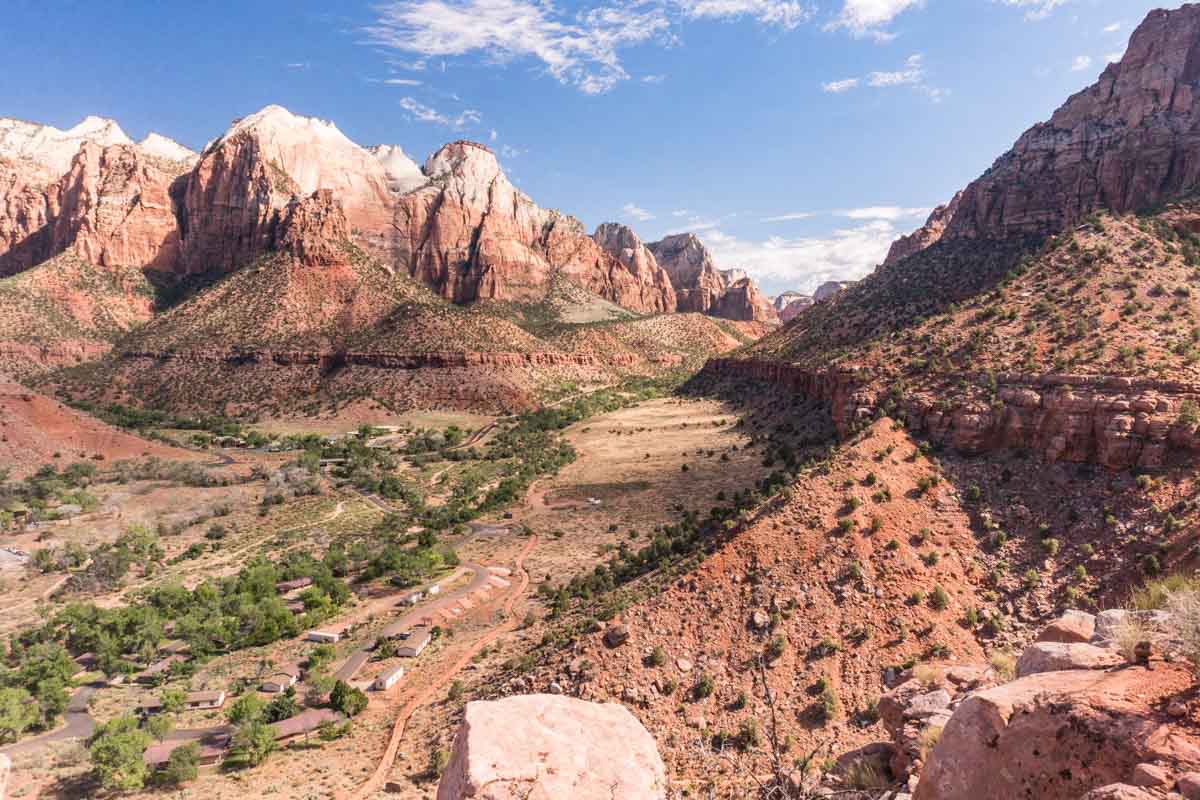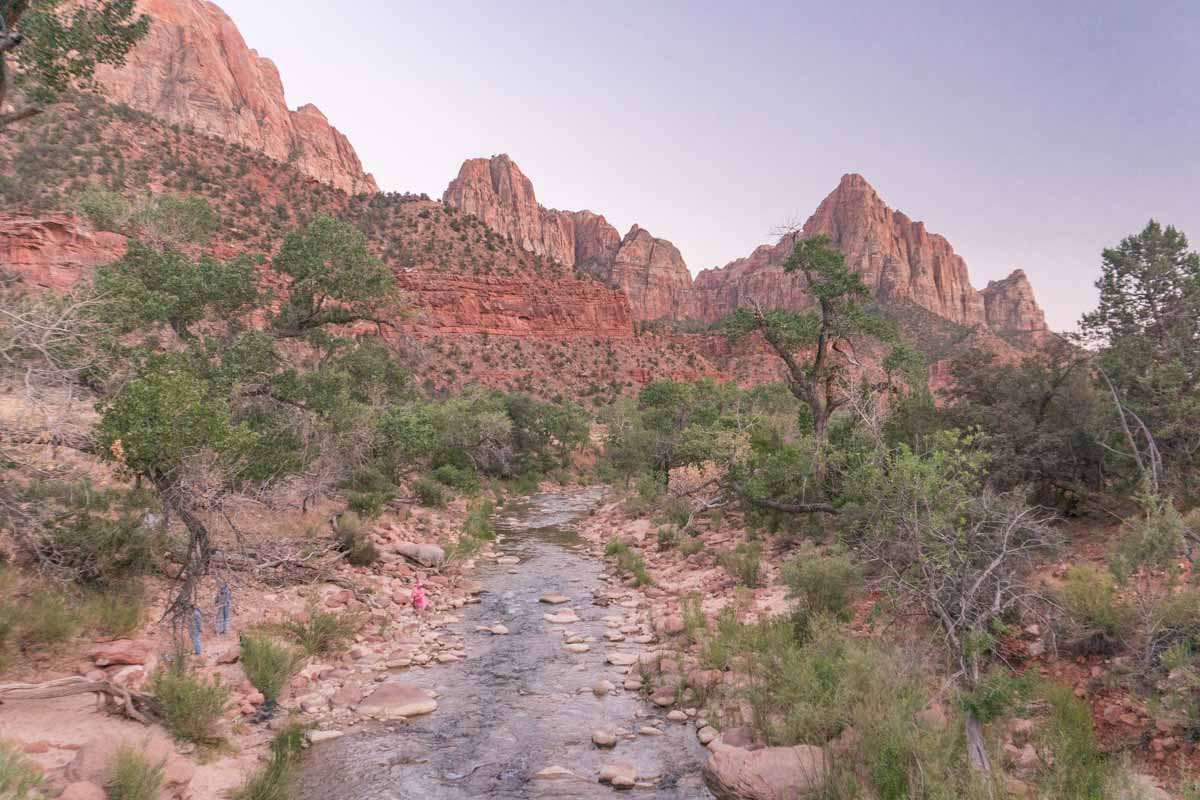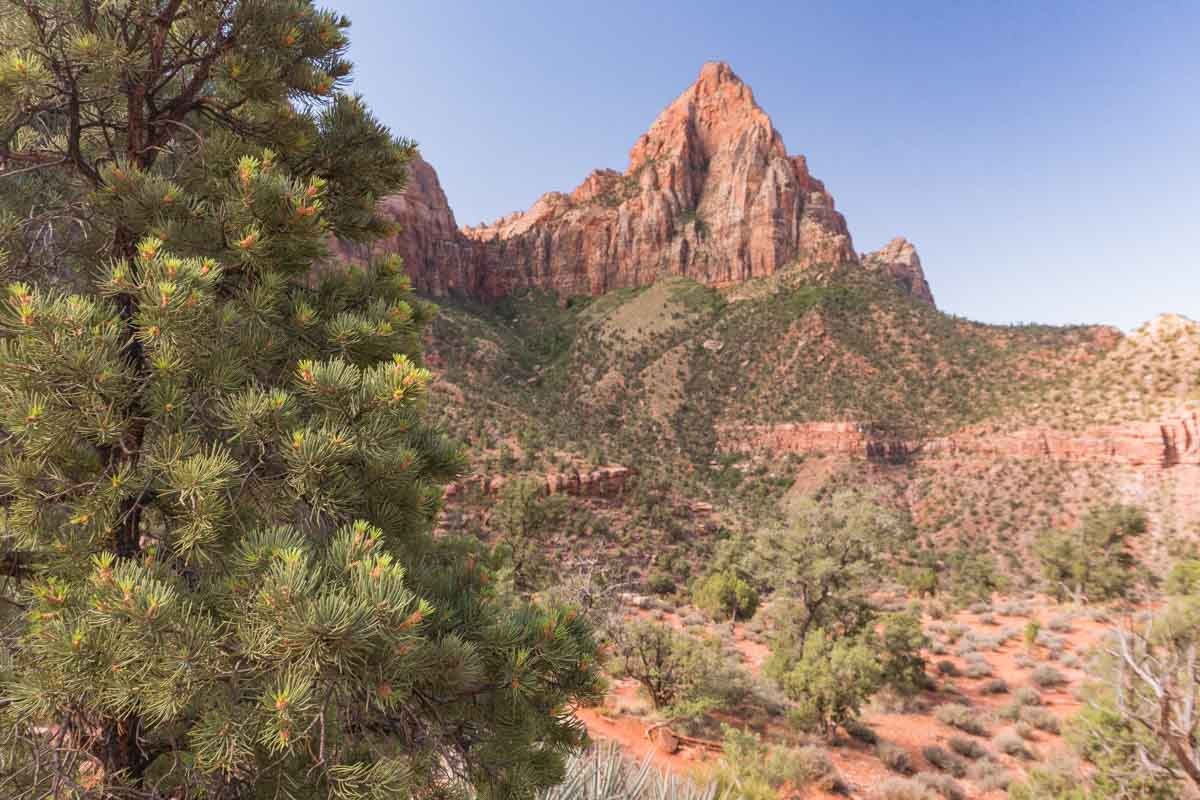

Winter is Zion’s quiet season. From December to February the crowds thin out, you can often drive the Zion Canyon Scenic Drive in your own car instead of queueing for the shuttle, and the red cliffs look even better with a dusting of snow on top. Days in the canyon are usually mild and sunny, but nights are cold, shady trails can be icy, and some roads and trails close for weather.
This guide covers what Zion is like month by month in winter, the best things to do, where to stay and how to prepare, with the shuttle dates, road closures and permit rules for winter 2026-27.
Why You Should Visit Zion National Park in the Winter

Zion is one of the busiest national parks in the US. In 2025 it recorded almost 5 million visits, second only to Great Smoky Mountains and ahead of Yellowstone, Yosemite and Rocky Mountain. In summer, that means queues for the shuttle, packed trailheads and car parks that are full by mid-morning.
Visiting this member of Utah’s Mighty Five in winter is the best way to avoid all that. You’ll share the park’s 232 square miles of canyons and rock formations with far fewer people, there’s none of the punishing summer heat, and hotel rates in Springdale tend to drop. For most of the winter, you can also drive yourself into Zion Canyon. See our guide to getting to Zion to plan your route.
Zion National Park in December

December is the coldest month in Zion Canyon, with average highs of around 52°F (11°C) and lows just below freezing, around 29°F (-2°C). It’s one of the drier winter months, with about 1.6 inches (42mm) of precipitation on average.
The Zion Canyon Shuttle doesn’t run from 29 November to 25 December 2026, so for most of the month you can drive the Scenic Drive yourself. From 26 December to 2 January, a holiday shuttle service runs and the road closes to private cars again. The holidays are much busier than the rest of the winter, so if you want the quietest trails, go in the first few weeks of December.
Zion National Park in January

January is a touch milder than December, with average highs of around 54°F (12°C) and lows of 30°F (-1°C), but wetter, with about 2 inches (51mm) of rain or snow. Snow on the canyon floor usually melts within hours, but it builds up on the higher plateaus.
Once the holiday shuttle ends, you can usually drive the Scenic Drive again from early January until the shuttle season starts in March. It’s a great time to tackle the park’s famous hikes without the crowds, including Angels Landing if you win a permit. Watch out for ice on shady trails.
Zion National Park in February

Zion National Park in February is the wettest of the three winter months, with just over 2 inches (52mm) of precipitation on average. It’s also the mildest, with highs of around 58°F (14°C) and lows just above freezing.
It’s still far drier than most places, so you’ll usually find plenty of clear days for hiking and sightseeing. It’s also a good month for wildlife: bighorn sheep lambs start appearing from mid-January on the park’s east side.
Top Things to Do in Zion National Park in the Winter
Hiking in the Southwest Desert
The low-lying Southwest Desert area of Zion, south of the main canyon near Rockville, is far too hot for long hikes in summer, but it comes into its own from autumn to spring. You’ll find wide open desert, mesas and views back to the mountains, and very few other people.
The best-known trail here is the Chinle Trail, which starts on Anasazi Way off Highway 9 between Rockville and Springdale. It’s 8.2 miles (13km) each way to Coalpits Spring, a round trip of over 16 miles, with around 600 feet of elevation change, so it’s a full day out. Avoid it after rain, when the trail gets very muddy.
Wildlife Photography

Winter is a rewarding time to bring your camera to Zion. Mule deer are commonly seen in Zion Canyon, and the bucks shed their antlers over the winter. Wild turkeys are common all year round, and if you’re lucky you might spot a bald eagle, an uncommon winter visitor.
For bighorn sheep, head to the stretch of the Zion-Mount Carmel Highway between the tunnel and the East Entrance, where you’re most likely to see them picking their way across the slickrock. Lambs are born from mid-January.
Top Tip: Sunrise and sunset are usually the best times to spot wildlife. Keep your distance and never feed the animals.
Angels Landing

You’ve probably seen this famous hike on Instagram. Angels Landing climbs almost 1,500 feet from the canyon floor to a narrow fin of rock with drop-offs on both sides, and the views from the top are some of the best in Zion. It’s 5.4 miles (8.7km) round trip.
You need a permit to hike beyond Scout Lookout, and demand is lower in winter. The seasonal lottery for hikes from 1 December 2026 to 28 February 2027 runs from 1 to 20 October, with results on 25 October. There’s also a day-before lottery, open from 12:01am to 3pm Mountain Time the day before you hike. Applications cost $6, plus $3 per person if you win.
The route climbs through the shady, chilly Refrigerator Canyon and up the tight switchbacks of Walter’s Wiggles before the chains section. Be careful: shaded sections can be icy in winter, and the chains section is dangerous when it’s icy or wet.
Top Tip: Pack traction devices (snow spikes) for your boots, and turn back if the chains section is icy. Go early in the day for the best light.
The Watchman Trail

Closure update, October 2026: the Watchman Trail is currently closed pending repairs, with no reopening date announced. Check current conditions before you go.
The Watchman Trail was one of our favourite hikes in Zion, and it’s criminally overlooked. Even though it starts right by the Zion Canyon Visitor Center, many visitors walk straight past it. Don’t make the same mistake.
It’s 3.3 miles (5.3km) round trip with about 480 feet of climbing, it’s not too difficult, and it rewards you with views of the Watchman and over the Zion valley. The lack of shade that makes it a scorcher in summer is a bonus in winter. It can be muddy or icy after bad weather, though.
Top Tip: Lots of people turn back at the first plateau. Don’t skip the short loop at the end: it’s not strenuous, and it has some of the best views of the Watchman on the whole trail.
Zion’s Scenic Drives

One of the best things about Zion in winter is being able to drive the Zion Canyon Scenic Drive yourself when the shuttle isn’t running. It follows the Virgin River up the main canyon past the Court of the Patriarchs and Zion Lodge to the Temple of Sinawava, with pull-outs for photos all the way. When parking in the canyon is full, the park may close the road temporarily, so go early.
The Zion-Mount Carmel Highway is open to cars all year. It climbs out of the canyon on switchbacks, through the Zion-Mount Carmel Tunnel and across the slickrock country of the east side to Checkerboard Mesa and the East Entrance. Look out for bighorn sheep on the rocks east of the tunnel.
A rockfall closed the highway from 30 September to 9 October 2026, and there’s a temporary gravel section until it’s repaved. Since June 2026, vehicles over 35 feet 9 inches long, 7 feet 10 inches wide or 11 feet 4 inches high have been banned from the highway. In the northwest of the park, the Kolob Canyons Road is currently closed beyond the South Fork Trailhead because of rockfall, and the Kolob Terrace Road usually closes for several months each winter because of snow.
Top Tip: Roads are ploughed, but they can close for snow, ice or rockfall. Check the forecast and current conditions before you set off.
Hiking the Narrows

Wading up The Narrows in winter might sound like a risky proposition, but with the right gear it’s a magical time to go.
Hear us out. Winter is one of the only times you can walk between the Narrows’ 1,000-foot walls without crowds of other hikers alongside you. The catch is the water, which stays below 50°F (10°C) in winter, so the park advises that you’ll likely need a dry suit to hike safely. Zion Adventure Company in Springdale rents winter dry suit packages from around $79 and is open year-round except Thanksgiving and Christmas.
Top Tip: The Narrows closes when the river is flowing above 150 cubic feet per second and during flash flood warnings. Check current conditions on the morning of your hike, and don’t drink the river water or put your head under, because of toxic cyanobacteria.
Unique Things to See & Do in Zion National Park in Winter: Hidden Gems That Are Off the Beaten Track
Scout Lookout Trail Via West Rim Trail

Didn’t get an Angels Landing permit? Take this 4.2-mile round-trip hike from the Grotto to Scout Lookout instead. You climb about 1,000 feet on the same trail as Angels Landing, through Refrigerator Canyon and up Walter’s Wiggles, to a viewpoint looking across at the final chains section. No permit needed. Allow about three hours.
The trail is quieter in winter, but it’s steep and the shady sections can hold ice, so bring poles and traction devices for your boots. The views from the top are almost as epic as Angels Landing itself.
Top Tip: Check the forecast, and save this hike for another day of your trip if there’s been recent rain or snow.
Snowshoeing on the East Rim
Does Zion close in the winter? No: the park is open all year, 24 hours a day, though some roads and trails close for snow, ice or rockfall.
After a good snowfall, the higher ground on the park’s east side is the place for snowshoeing. The East Rim Trail starts by the East Entrance, near Checkerboard Mesa, and typically has deep snow in winter. It’s 5.9 miles (9.5km) each way to Stave Spring, with about 1,000 feet of climbing. Note that the far end of the trail, between Echo Canyon and Weeping Rock, is closed indefinitely, so you can’t hike through to Zion Canyon. Bring your own snowshoes.
Top Tip: Snowshoeing here needs experience, navigation skills and a careful eye on the weather. Tell someone your plans before you set out.
Snowboarding (or Skiing) in Brian Head

Does Zion get snow? Yes, though in the canyon it rarely lasts long.
For proper snow, head to Brian Head Resort, the closest of the ski resorts in Utah to Zion. It’s about 100 miles from Springdale via I-15 and Parowan, roughly an hour and 45 minutes’ drive. The resort has 71 runs over 650 acres, with a base above 9,500 feet. There’s plenty for beginners, and around 30% of the terrain is advanced or expert. The 2026-27 season opens on 6 November 2026.
Top Tip: Brian Head runs night skiing on Friday and Saturday evenings until 9pm (plus daily over holiday periods), with cheaper night tickets. Check the resort’s website for this season’s dates.
Take Your Holiday Photos
Head to Zion National Park in December and capture some festive photos in the canyon.
You and your loved ones under the towering canyon walls or alongside the Virgin River, in your best winter jumpers, make for brilliant holiday cards. If there’s been fresh snow on the cliffs, get out early before it melts.
Go on a Riverside Bike Ride
Cycling is a great way to explore Zion, and in winter the trails are far quieter than in the warmer months.
The Pa’rus Trail is a mellow, paved path along the Virgin River below the Watchman, and it’s the only trail in the park open to bikes. You can also ride the Scenic Drive, keeping to single file. Only Class 1 pedal-assist e-bikes are allowed in the park, and bikes aren’t allowed through the Zion-Mount Carmel Tunnel. Zion Adventure Company in Springdale rents e-bikes and is open year-round except Thanksgiving and Christmas.
Top Tip: Check the weather before you set off. Rain, snow and ice make cycling dangerous.
Stargazing

You can’t go to Zion and not go stargazing. Zion was certified as an International Dark Sky Park in 2021, and in winter the long nights give you hours of darkness, though you’ll want to wrap up warm. Winter brings more cloud, so check cleardarksky.com for the best nights.
If you’re on foot, stick to the paved Pa’rus Trail, which is easy to follow in the dark. Or camp in Zion to have the sky right above your tent.
Top Tip: Watchman Campground is the only campground in Zion open in winter, and it can still fill up. Book on Recreation.gov, up to six months ahead.
Practical Tips for Exploring Zion in the Winter
Where to Stay Near Zion National Park

For camping, Watchman Campground, a short walk from the Visitor Center and the Pa’rus Trail, is open all year. South Campground reopened in May 2026 after a full renovation but is closed in winter, and Lava Point is closed in winter too.
If camping sounds a bit too chilly, there are plenty of hotels in and near Zion. Zion Lodge, the only hotel inside the park, is open year-round, as is its Red Rock Grill.
Flanigan’s Resort & Spa
Flanigan’s Resort & Spa in Springdale is about 0.7 miles from the park entrance, an easy walk. After a cold day on the trails you can warm up at its Deep Canyon Spa, and it’s home to the Spotted Dog restaurant, where we really liked the food.
Hampton Inn & Suites Springdale
This is where we stayed. Hampton Inn & Suites Springdale is keenly priced and the rooms are very spacious; some have a view of the Watchman. It isn’t luxurious and the breakfast is forgettable, but it’s good value about a mile from the park. For more ideas, see our guide to where to stay in and near Zion.
Expect the Unexpected Visiting Zion in the Winter

According to the National Park Service, nearly half of Zion Canyon’s annual precipitation falls between December and March. Ice is likely anywhere that stays in the shade, including parts of the Lower Emerald Pool, Weeping Rock and Watchman trails, and some trails close because of the risk of falling ice.
Some facilities also change in winter. The Zion Canyon Visitor Center opened from 8am to 5pm daily last winter, but the Human History Museum and Zion Lodge’s Castle Dome Café are usually closed until spring. And when you can drive the Scenic Drive, arrive early: the park may close it temporarily once the car parks are full.
Pack for the Winter Weather in Zion

Of course, you’ll need warm layers, thermals, a hat and gloves, as temperatures drop below freezing most nights. But there are a few other things worth packing for Zion in winter.
Traction devices (snow spikes) for your boots are the most important, as the park recommends them for winter hiking. Add hiking poles, waterproof footwear and a head torch for the short days. If you’re planning to hike The Narrows, rent a dry suit in Springdale rather than trying to make do.
Visit the Park Website for Updates
Visiting Zion National Park between December and February?
Check the park’s current conditions page before you go and on the morning of each day’s plans. It lists trail and road closures, The Narrows’ status and weather warnings.
Need More Inspiration for Zion National Park?
- The Best Things to do in Zion
- Where to Stay in Zion National Park
- The Best Hikes in Zion National Park
- 2 Days in Zion: The Ultimate Itinerary
Love This? Save and Share on Pinterest