Zion’s remote setting in southwest Utah is a big part of its appeal, but it does mean working out how to get there. Almost 5 million people visited Zion National Park in 2025, and the vast majority arrived by car, usually after flying into Las Vegas, Salt Lake City or the small regional airport in St George.
This guide covers the airports near Zion, the best driving routes from major cities and the stops worth making on the way, plus the public transport options if you’d rather not drive and how the park’s shuttle works once you arrive. If you’re combining Zion with the rest of southern Utah, it will help you plan that too.
Airports Near Zion National Park
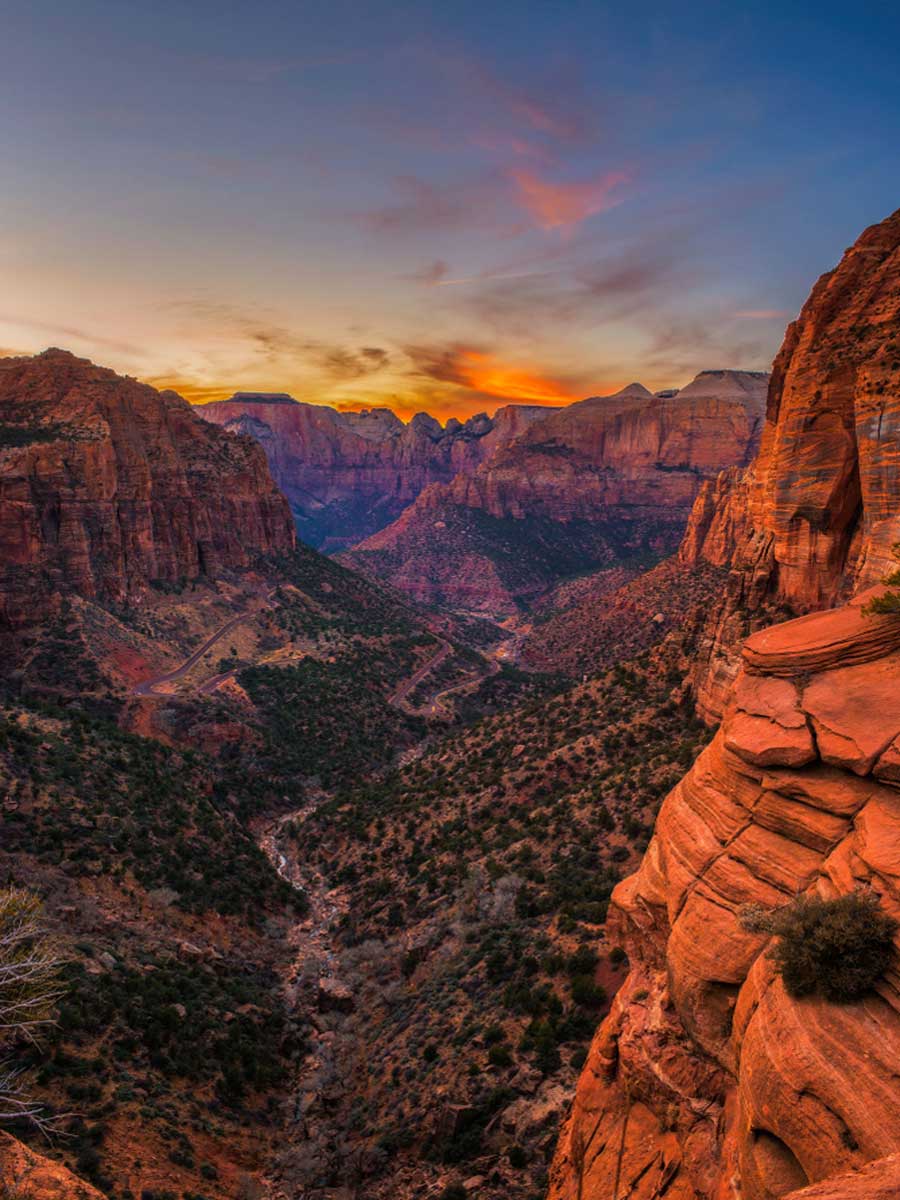
Flying to Zion National Park? You have a few choices. As with most of the Mighty Five in Utah, you’ll fly into a (somewhat) nearby airport and drive the rest of the way. Here are your best options.
Harry Reid International Airport (Las Vegas, Nevada)

The most popular choice for visitors to Zion is Harry Reid International Airport (LAS) in Las Vegas. Despite being in another state, it’s the closest major international airport, about 165 miles from Springdale, or around 2 hours 45 minutes by car. Flights are plentiful and often good value, there’s a huge choice of rental cars, and you can spend a night or two on the Strip.
Can you think of anything better than returning from the canyons to the bright neon lights of Las Vegas? We can’t.
Salt Lake City International Airport (Salt Lake City, Utah)
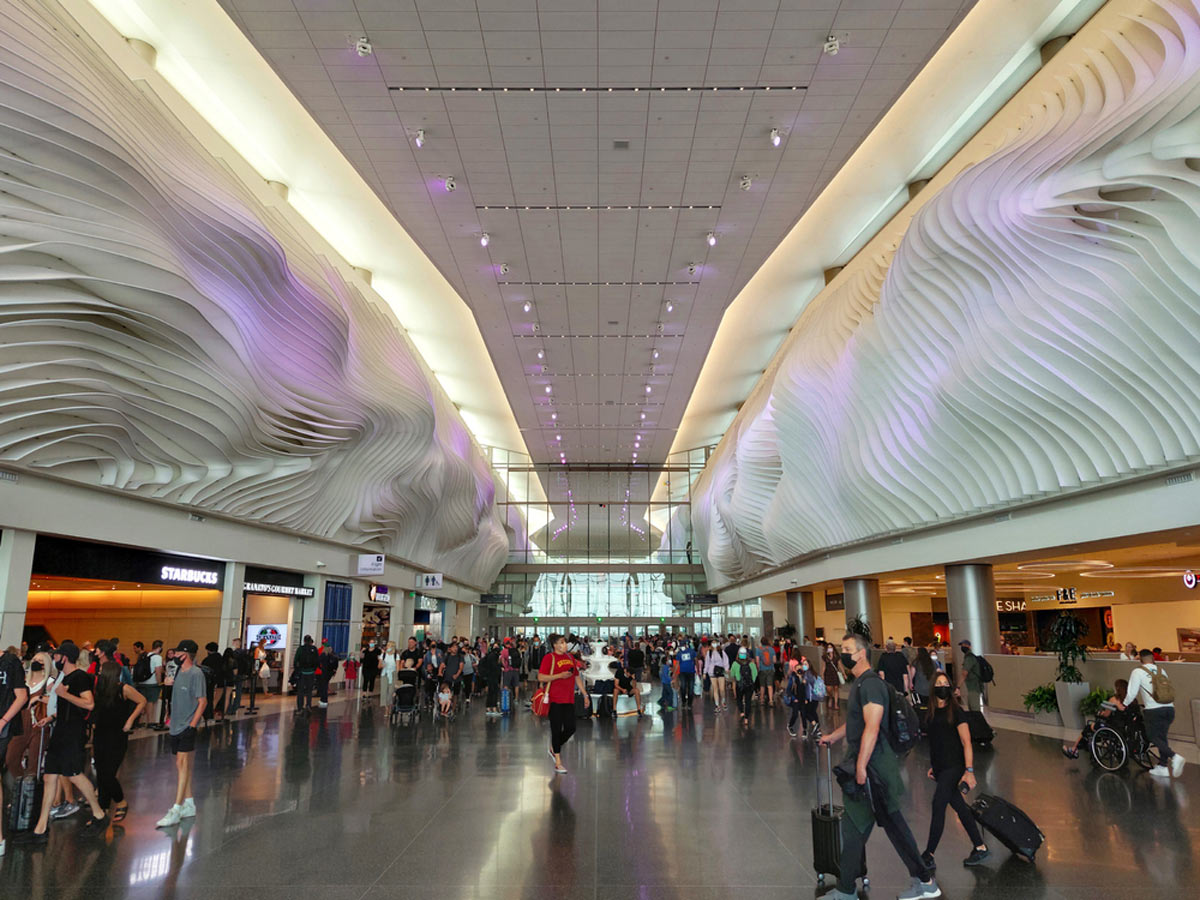
Salt Lake City International Airport (SLC) is the other big option, and a good one if you’re planning a wider Utah road trip. It’s about 310 miles from Springdale, around 4 hours 30 minutes by car, so most people break the journey or stop off along the way.
Rental cars are easy to find, and there are plenty of airport hotels if you’re arriving late.
St. George Regional Airport (St. George, Utah)
St. George Regional Airport (SGU) is the closest airport to Zion with scheduled flights, about 44 miles or an hour’s drive from Springdale.
It’s a small airport, served by regional jets. Delta flies from Salt Lake City, United from Denver and Los Angeles (plus Chicago O’Hare from May to August), and American from Dallas/Fort Worth and Phoenix. From further afield, you’ll need to connect through one of those hubs.
Cedar City Regional Airport (Cedar City, Utah)
Cedar City Regional Airport (CDC) is about an hour’s drive north of Springdale, and handy for the Kolob Canyons section of the park. It only has flights to and from Salt Lake City, with Delta Connection, so it’s mainly useful if you’re connecting there.
Comparing Your Options
So which airport is best for getting to Zion National Park? It depends on where you’re flying from, the time of year and how much you mind connections or a longer drive. Here’s how they compare.
| Airport | Distance to Springdale | Drive Time | Flights |
| Las Vegas (LAS) | ~165 miles | ~2 hrs 45 mins | Major international hub, nonstops from across the US and some international routes |
| Salt Lake City (SLC) | ~310 miles | ~4 hrs 30 mins | Delta hub, nonstops from across the US and some international routes |
| St George (SGU) | ~44 miles | ~1 hr | Salt Lake City, Denver, Los Angeles, Dallas/Fort Worth, Phoenix; Chicago in summer |
| Cedar City (CDC) | ~59 miles | ~1 hr | Salt Lake City only |
Want our advice? Fly direct to Las Vegas or Salt Lake City if you can, and compare fares early, as prices swing a lot with the season. Visiting in spring or autumn rather than summer can save you a lot on both flights and car hire.
You’ll be doing plenty of driving once you land, so a direct flight is usually worth paying a little extra for. If your budget allows and the schedule works, flying into St George saves you most of the drive, which is ideal if you’re only visiting Zion National Park.
Driving to Zion National Park
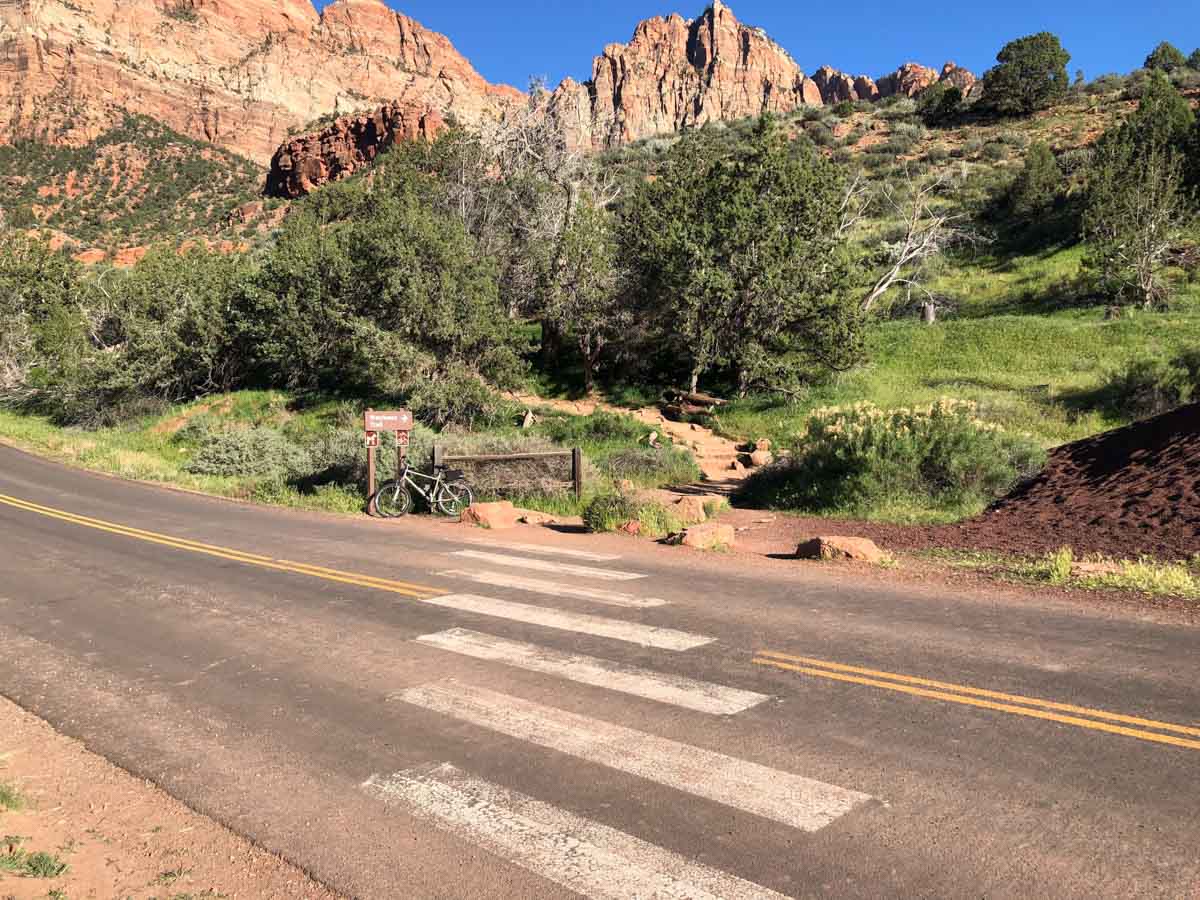
Whether you’re on a cross-country road trip or picking up a rental car at the airport, driving is by far the easiest way to get to Zion, and a big part of the fun. Clear blue skies and the open road through the desert make for a classic Southwestern road trip.
Zion has two main entrances. The South Entrance at Springdale, on Highway 9, is the gateway to Zion Canyon and the shuttle. The East Entrance, also on Highway 9, is the way in from Mount Carmel Junction, Kanab and Bryce Canyon. The Kolob Canyons section in the northwest has its own entrance at Exit 40 on Interstate 15.
Book your rental car with Rentalcars.com
Driving to Zion National Park From Las Vegas, Nevada
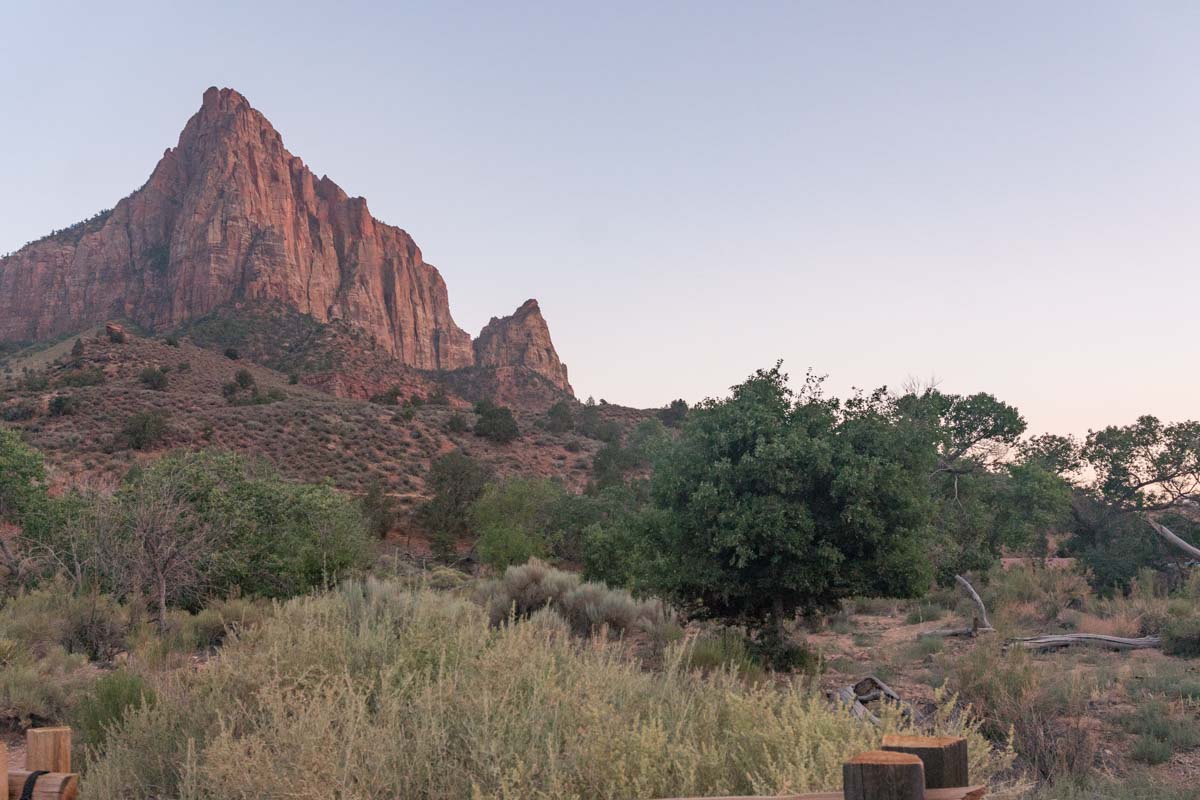
The most popular way to get to Zion National Park is to fly into Las Vegas, pick up a rental car and make the drive of around 2 hours 45 minutes.
You can do this in a couple of ways. Most people drive to one of the hotels near Zion (Springdale is the most convenient; towns further out are cheaper) and spend the night, ready to hit the trails very early the next morning.
Or, if you only have one day, you can visit Zion as a day trip from Las Vegas. It makes for a long day, with more than five hours of driving, but it means you can return to Sin City’s hotels and restaurants in the evening.
Route Description
Getting to Zion National Park from Las Vegas is easy. Take Interstate 15 north through the corner of Arizona into Utah, past St George, then leave at Exit 16 and follow Highway 9 east through Hurricane, La Verkin, Virgin and Rockville to Springdale.
Estimated Travel Time
Allow around 2 hours 45 minutes for the roughly 165 miles without stops. Remember that Utah is an hour ahead of Nevada, so you’ll lose an hour on the way. If you want to see more of Utah and Nevada along the way, allow extra time.
Scenic Stops Along the Way
- Valley of Fire State Park: Nevada’s oldest state park is a short detour from Exit 75 on I-15, about 14 miles each way. Its fiery red sandstone, ancient petroglyphs and short trails make a brilliant warm-up for Zion. Entry is $15 per vehicle for non-Nevada cars, and the park is open from sunrise to sunset.
- Lake Mead: for a longer, more scenic route out of Las Vegas, take Northshore Road through Lake Mead National Recreation Area, past the vast reservoir on the Colorado River, and join Valley of Fire Road back to I-15. Lake Mead charges $25 per vehicle, card only.
- St. George: this fast-growing city sits right on I-15 and is a great place for a break. Visit the St George Dinosaur Discovery Site at Johnson Farm to see real dinosaur tracks (open 10am to 5pm, $10 for adults), or the red and black lava rock of Snow Canyon State Park ($20 per non-Utah vehicle).
- Coral Pink Sand Dunes State Park: technically this is beyond Zion, about an hour from Springdale or 35 minutes from the East Entrance, but its rippling pink dunes are a great add-on if you’re heading towards Kanab or Bryce Canyon. Day use is $15 per vehicle.
Driving to Zion National Park From Salt Lake City, Utah
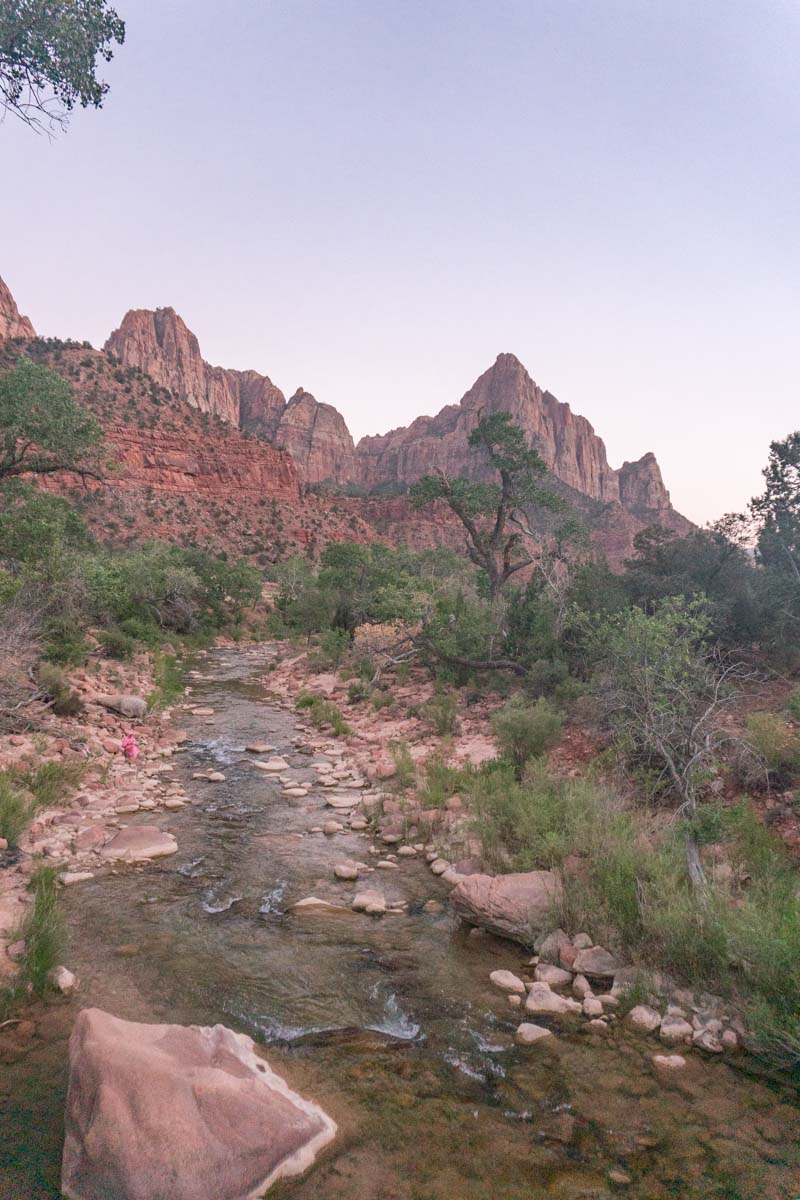
Starting in Salt Lake City, you can drive to Zion in around 4 hours 30 minutes. Many visitors spend a night in Salt Lake City or a nearby mountain town like Park City before heading south.
We’d always budget extra time for stops along the way. You can also make a longer loop through the national parks, taking in Canyonlands National Park or Capitol Reef National Park on the way, but that turns the drive into a road trip of several days.
Route Description
Take Interstate 15 south for most of the way, past Provo and Cedar City. Leave at Exit 27 and follow Highway 17 through Toquerville to join Highway 9 at La Verkin, then continue east to Springdale.
Estimated Travel Time
Driving straight through, the roughly 310 miles take around 4 hours 30 minutes.
Scenic Stops Along the Way
- Provo: for some culture before the canyons, stop at Brigham Young University’s Monte L. Bean Life Science Museum, which is free to visit (closed on Sundays).
- Kolob Canyons: right off I-15 at Exit 40, this quieter section of Zion has a 5-mile scenic drive past deep red finger canyons. Check current conditions: in October 2026 the road was reported closed beyond the South Fork Trailhead after a rockfall.
- Bryce Canyon National Park: it’s a detour, adding roughly 45 miles and an hour and a half of driving, but the hoodoos are worth it. Leave I-15 at Exit 95 and head east to Bryce Canyon City, ideally for a night, then continue to Zion’s East Entrance via Highway 89.
How to Drive to Zion National Park From Other Major Cities
Phoenix, Arizona
Phoenix to Zion is around 385 miles, or 6 hours 30 minutes to 7 hours. Take I-17 north to Flagstaff, then Highway 89 through Page and Kanab to Mount Carmel Junction, entering through Zion’s East Entrance. It’s a spectacular drive, and you can easily add the Grand Canyon on the way.
Los Angeles, California
Taking a road trip from California to Utah’s national parks? Los Angeles to Springdale is around 425 miles, or 6 hours 30 minutes to 7 hours, almost all of it on Interstate 15 via Las Vegas.
Denver, Colorado
Denver to Zion is a long drive of around 615 miles, taking 9 to 10 hours in good conditions, via I-70 west and I-15 south.
In winter it can take much longer. Colorado’s traction law covers I-70 through the mountains from September to May: two-wheel-drive cars must carry chains or another approved traction device, and four-wheel or all-wheel-drive vehicles need suitable tyres. If you’re not used to driving on snow and ice, consider flying instead.
Car Rental Options and Tips for Driving to Zion National Park
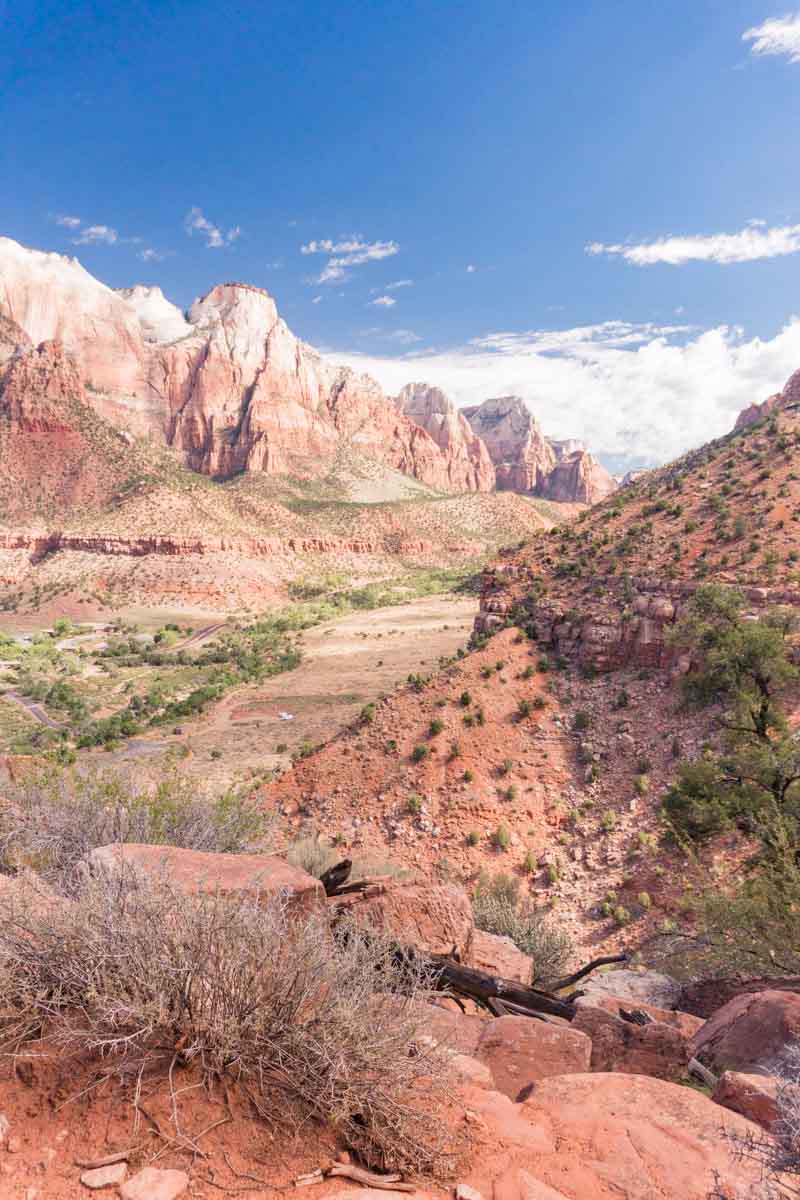
For most visitors, the best way to travel to Zion is in a rental car from one of the nearby airports. Here are a few things to know before you book.
- Picking up at the airport is usually the most convenient option, especially at Las Vegas and Salt Lake City.
- Book early with free cancellation and keep an eye on rates, which go up and down constantly.
- Arrange anything extra ahead of time, like a child seat or a four-wheel drive for winter.
- Renting an RV or towing a trailer? Since 7 June 2026, vehicles over 35 feet 9 inches long, 7 feet 10 inches wide or 11 feet 4 inches high (or 50 feet combined) are banned from the Zion-Mount Carmel Highway between Zion Canyon and the East Entrance. Larger vehicles have to go around, which can add a lot of time.
- Budget for the park entrance fee: $35 per vehicle for seven days. From 1 January 2026, non-US residents aged 16 and over also pay $100 per person, unless they hold an annual pass. The $250 non-resident annual pass covers everyone in your car and can quickly pay for itself if you’re visiting several parks.
- If it’s your first trip to Utah, consider adding a night or two in Moab for Arches National Park and other fantastic locations.
Public Transportation Options to Get to Zion National Park
Bus services
Getting to Zion National Park by bus takes some planning, as there’s no direct public bus from Las Vegas or Salt Lake City. The usual route is a long-distance bus to St George, then a local bus or shuttle to Springdale.
Greyhound, FlixBus and Salt Lake Express
Greyhound and FlixBus run around 10 buses a day from Las Vegas to St George, taking from about 2 hours 30 minutes, with fares from around $50. From Salt Lake City there are about three a day, taking from 5 hours 30 minutes, from around $85.
Salt Lake Express also runs between Las Vegas and St George around 10 times a day, from about $35, and between Salt Lake City and St George.
Local Shuttle Services
From St George, the public SunTran Zion Route bus runs to Springdale year-round, Monday to Saturday, for $5 each way, stopping in Washington, Hurricane, La Verkin and Virgin. From its last stop on Lion Boulevard, you can hop on the free Springdale shuttle to the park.
Private shuttles cover the same route and more. The St. George Shuttle connects St George with Las Vegas and Salt Lake City airports and offers a Zion service, while National Park Express runs one-way shuttles from Las Vegas and from St George to the Zion Canyon Visitor Center, from around $95.
Train Services
Amtrak Options and Connections
There’s no practical way to get to Zion National Park by train. Neither St George nor Las Vegas has an Amtrak station; the nearest are Salt Lake City and Provo on the California Zephyr, and Flagstaff on the Southwest Chief, each around four hours’ drive away. The planned Brightline West high-speed line between Southern California and Las Vegas isn’t expected to open until 2029 at the earliest.
Combining Public Transportation With Driving
Want to combine public transport with driving? You can take a train or bus to Salt Lake City or Las Vegas and hire a car there. If you’re driving a large vehicle, the Zion Corridor Park & Ride in Virgin, which opened in March 2026, has free parking and a $5 shuttle to Springdale.
Zion National Park Shuttle System
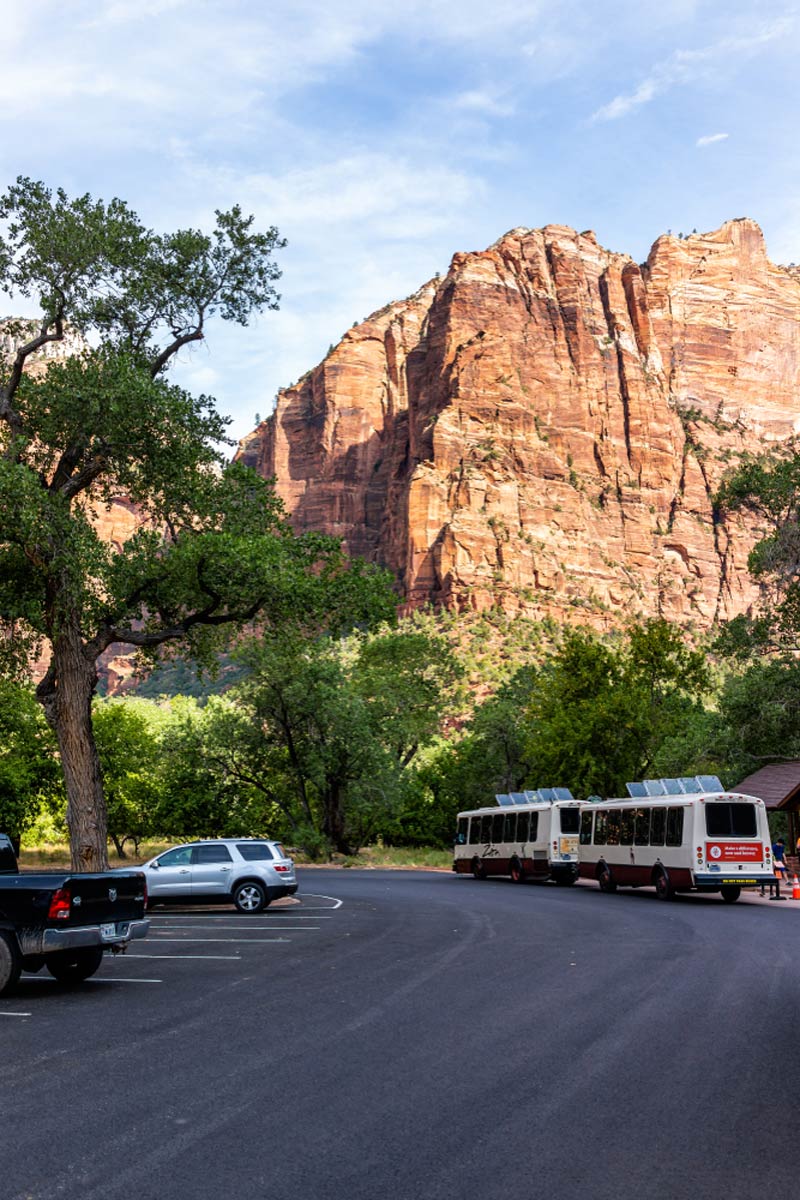
For most of the year, the Zion Canyon Shuttle is the only way into Zion Canyon, as the Scenic Drive is closed to private cars. The car parks at the Visitor Center typically fill by 8 or 9am, so unless you arrive very early, you’ll want to know how the shuttle works.
Overview of the Shuttle System
Getting Around Zion National Park by Shuttle
The shuttles are free and you don’t need a ticket or reservation, just your park pass. In 2026 they run from 7 March to 28 November, with a holiday service from 26 December to 2 January. Outside those dates, you can drive the Scenic Drive yourself.
The Zion Canyon Line takes you to all the big sights in the main canyon, including Zion Lodge, Angels Landing and The Narrows. But Kolob Canyons and Canyon Overlook, two of Zion’s best under-the-radar spots, aren’t on the shuttle route, so you’ll need a car to reach them.
Where to Catch the Shuttle
If you’re staying in Springdale, take the Springdale Line from a stop near your hotel to the pedestrian entrance, then walk into the park to the Visitor Center. If you’ve driven in early and parked at the Visitor Center, the Zion Canyon Line starts right there.
The first Zion Canyon Line bus leaves the Visitor Center at 7am, and queues build through the morning, so go early. Parking in Springdale costs $15 to $25 a day on the street, depending on how close you are to the park.
Shuttle Stops and Points of Interest
You’ve caught the first shuttle of the morning; good job. But where should you go? Here’s what you’ll find along the way.
What to Know About the Springdale Line
The Springdale Line has nine stops through town, many of them outside hotels and restaurants, ending at Zion Canyon Village by the park entrance. Buses run every 10 to 15 minutes from 8am, with the last bus at 7pm (8pm in summer and 6pm from late October).
Points of Interest on the Zion Canyon Line
- Human History Museum (Stop 2): learn about the park’s Native American and pioneer history and watch a short film about Zion. It’s open from spring to autumn, and only down-canyon buses stop here.
- Canyon Junction (Stop 3): the end of the Pa’rus Trail, which you can walk or cycle from the Visitor Center, with gorgeous views of the canyon along the way.
- Court of the Patriarchs (Stop 4): a short walk to a viewpoint of the Three Patriarchs.
- Zion Lodge (Stop 5): the only hotel inside the park, and the start of the Emerald Pools trails. Its Red Rock Grill and seasonal Castle Dome Café are the only places to eat in the park, so most people bring a packed lunch.
- The Grotto (Stop 6): the trailhead for Angels Landing and Scout Lookout.
- Weeping Rock (Stop 7): reopened in September 2025 after a rockfall, with a short trail to a dripping alcove. The trails to Hidden Canyon and Observation Point from here are still closed.
- Temple of Sinawava (Stop 9): the end of the line and the start of the Riverside Walk and The Narrows.
Shuttle Schedule and Frequency
Last buses up the canyon leave the Visitor Center at 6pm in spring and autumn, 7pm in high summer and 5pm from late October. For the full timetable, check the National Park Service shuttle page.